1
Intake
Apply the right review
Capture how the vendor will be used, what information it can access, and how critical it is to the business.
Output: Right-sized assessment
Most vendors have already documented their security posture in SOC 2 reports, certifications, policies, prior questionnaires, and published Trust Centers. Whistic begins with that evidence. Your team asks only for what is still missing.
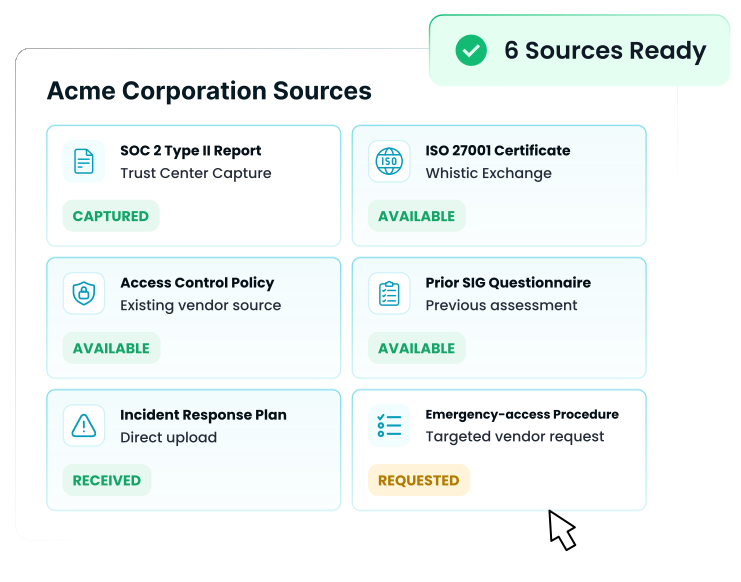
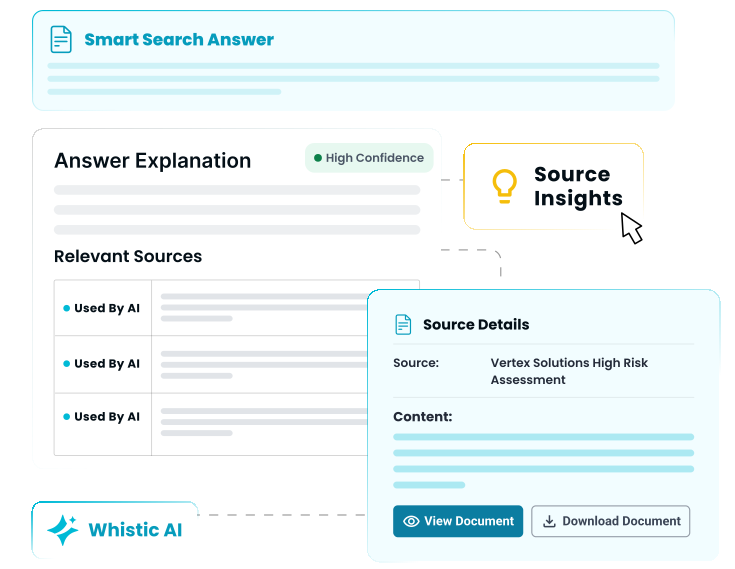
Whistic Assess maps vendor evidence to the controls and frameworks that matter to your program. Every finding can be inspected, verified, and acted on.
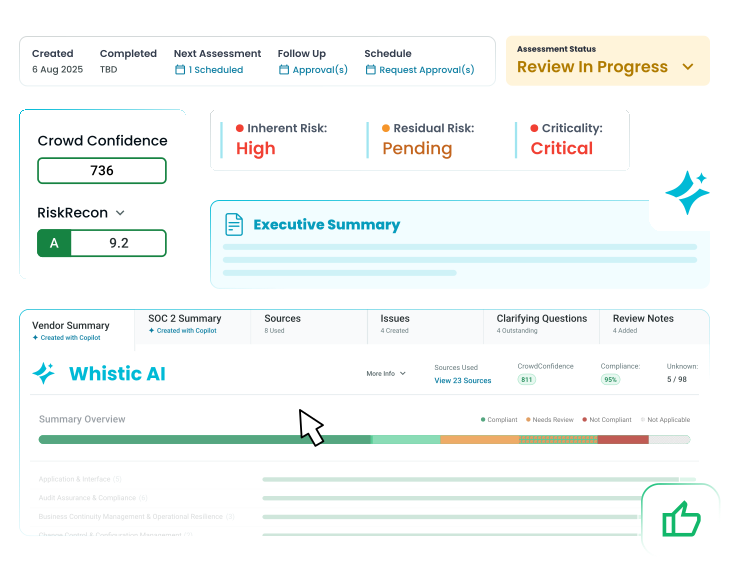
Whistic organizes the findings and moves the assessment toward a decision-ready state. Your team determines what is acceptable, what needs follow-up, and what happens next.
For one Fortune 200 financial services customer, Whistic reduced both the work required for each assessment and the time required to complete the process.
Time per assessment
Documented reduction in analyst effort
Assessment turnaround
From intake to completed review
Annual labor savings
Based on measured customer outcomes.
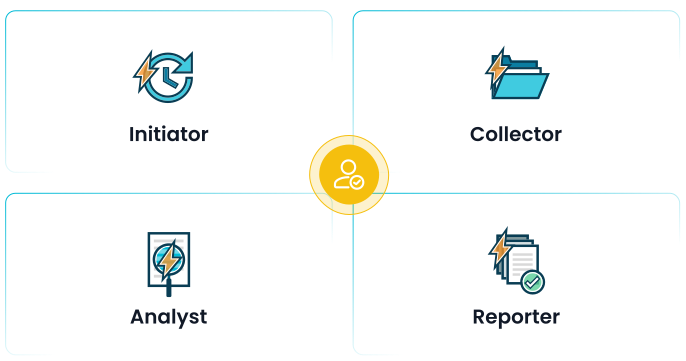
Automation Orchestrator applies four specialized agents to the repeatable work inside Assess. Your team reviews the output and retains the final decision.
Understand how Whistic collects evidence, applies AI, supports human review, and fits into your vendor risk program.
Whistic Assess is an AI-first vendor assessment engine that connects vendor intake, evidence collection, AI-assisted review, Issues, stakeholder approval, finalization, and reassessment in one workflow.
Yes. Whistic can begin with existing vendor documents, prior assessments, Trust Center Exchange content, Trust Center Capture, and direct uploads. Questionnaire and document requests can then be used only for the remaining gaps.
Whistic can use SOC 2 reports, ISO certifications, policies, completed questionnaires, Trust Center documents, prior assessment materials, uploaded files, and other configured vendor sources.
Whistic supports configurable frameworks and allows teams to evaluate evidence against the controls that matter to their program.
Yes. Reviewers can inspect the source, confidence, and explanation behind a finding. They can add notes, change a result when justified, create an Issue, retry an unknown result, or request clarification.
A general-purpose AI tool can help with a one-time summary. It does not manage the review over time, tie it to a vendor workflow, assign ownership, preserve it as governed evidence, route it through approval, or create the audit trail required for an enterprise TPRM program.
No. Whistic AI helps collect, analyze, and organize evidence. Human reviewers and approvers make and finalize the risk decision.
The reviewer proposes a status and routes the assessment for stakeholder review. Feedback, conditions, revisions, status changes, and finalization activity remain part of the assessment record.
Automation handles repetitive work such as gathering sources, running analysis, moving routine steps, and compiling outputs. The TPRM team still applies judgment, evaluates exceptions, escalates Issues, works with vendors, and makes final approval decisions.
Assess is the vendor assessment workflow. Automation Orchestrator applies the Initiator, Collector, Analyst, and Reporter agents to the repeatable work inside that workflow. People retain the final decision.
See how Whistic turns vendor evidence into cited analysis, focused review, and a defensible assessment record.


